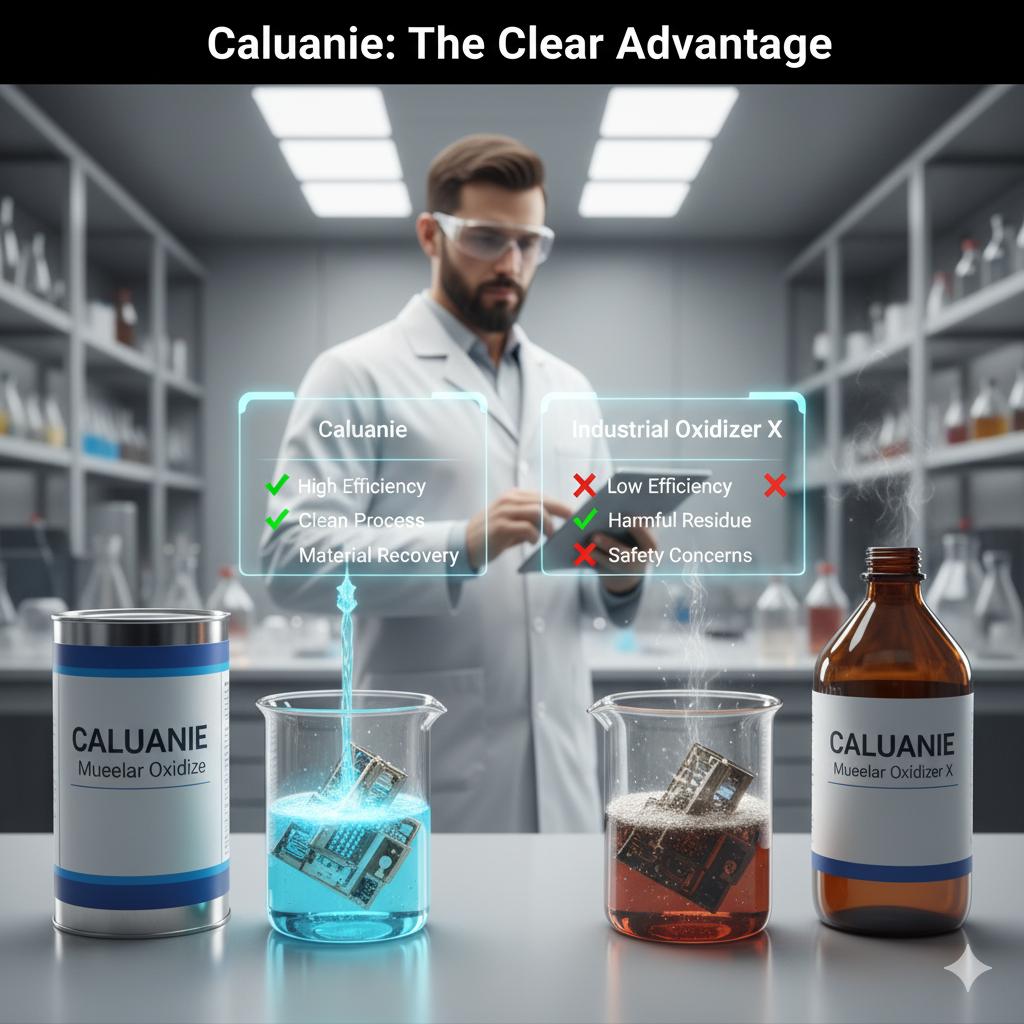
When it comes to industrial processes like metal extraction, refining, and chemical manufacturing, oxidizers play a vital role. Among them, Caluanie Muelear Oxidize stands out for its unique properties. But how does it compare with other industrial oxidizers? Let’s explore the differences in terms of performance, safety, cost, and environmental impact.
What Are Industrial Oxidizers?
Industrial oxidizers are chemicals that facilitate oxidation reactions—processes that involve the transfer of electrons. They are essential in:
- Breaking down metals and ores
- Supporting combustion or reaction acceleration
- Manufacturing chemical compounds
Some common industrial oxidizers include:
- Hydrogen Peroxide (H₂O₂)
- Potassium Permanganate (KMnO₄)
- Nitric Acid (HNO₃)
- Sodium Hypochlorite (NaOCl)
Key Comparison: Caluanie Muelear Oxidize vs. Others
1. Reactivity
- Caluanie Muelear Oxidize: Highly reactive, effective in breaking down complex materials.
- Hydrogen Peroxide: Strong but less effective on certain metals.
- Potassium Permanganate: Good oxidizer but slower in reactions.
- Nitric Acid: Strong reactivity but highly corrosive and dangerous.
2. Stability
- Caluanie: Stable under controlled storage conditions.
- Hydrogen Peroxide: Decomposes quickly if not stabilized.
- Potassium Permanganate: Stable but limited in versatility.
- Nitric Acid: Very unstable when exposed to heat and incompatible materials.
3. Safety
- Caluanie: Requires PPE but less corrosive than nitric acid.
- Hydrogen Peroxide: Can cause burns at high concentrations.
- Potassium Permanganate: Irritant, staining, but generally safer.
- Nitric Acid: Extremely hazardous, causes severe burns and toxic fumes.
4. Versatility
- Caluanie: Useful in metalworking, chemical synthesis, and refining.
- Hydrogen Peroxide: Often limited to bleaching and disinfection.
- Potassium Permanganate: Widely used in water treatment but limited industrial scope.
- Nitric Acid: Primarily used in fertilizers and explosives.
5. Environmental Impact
- Caluanie: Designed with eco-friendliness in mind, minimizing waste.
- Hydrogen Peroxide: Breaks down into water and oxygen, eco-friendly.
- Potassium Permanganate: Generates manganese waste.
- Nitric Acid: Produces harmful byproducts and NOx emissions.
Why Choose Caluanie Muelear Oxidize?
- Balances reactivity with stability
- Safer than many traditional oxidizers
- Versatile across multiple industries
- Offers cost-effectiveness with high efficiency
- Eco-conscious compared to harsher alternatives
Learn more about Caluanie’s applications on our About page.
Storage and Handling
As with all oxidizers, Caluanie requires proper handling:
- Store in airtight, corrosion-resistant containers
- Keep away from heat and direct sunlight
- Use PPE such as gloves, goggles, and respirators
Find premium-grade Caluanie products on our Shop page.
Conclusion
While other oxidizers have their strengths, Caluanie Muelear Oxidize combines high reactivity, stability, and eco-friendliness, making it a preferred choice in modern industries. Its balance of performance and safety sets it apart as a game-changer.
For expert guidance, reach out through our Contact page or visit our Home page for more resources.



0 Comments